

How To Quiet Food Noise Without a GLP-1
You’ve probably heard the term “food noise” everywhere lately. The constant mental chatter about food: what you’re going to eat, what you shouldn’t have eaten, what you’ll allow yourself tomorrow.
This preoccupation with food follows you everywhere: into meetings, into conversations, into bed at night. And now there’s a medication that promises to turn it off.
It’s no wonder so many people are looking at GLP-1 medications and thinking: maybe that’s what I need. If you’ve spent years feeling like you have no control around food and can never maintain a diet, this sounds like a miracle drug.
If you are considering a GLP-1 to help with food noise, I want you to feel empowered to make a choice that feels best for you.
Because a lot of provider don’t understand the effects disordered eating can have on food noise and that a GLP-1 can just be a band-aid versus the best solution.
Why do I have food noise?
Let’s be clear: food noise is not a character flaw. We all have different baseline levels of hunger hormones that affect how much we think about food.
But here’s something that gets missed when talking about food noise: restrictive dieting can actually be the cause. Extreme calorie cutting raises hunger hormones like ghrelin and lowers satiety hormones like leptin (source). This leads to stronger cravings and more obsessive thoughts about food.
Research also shows that after weight loss, hunger-promoting hormones increase while satiety hormones decrease (source). This helps to explain the increased cravings and preoccupation with food that often follow dieting.
If you’ve been dieting on and off for years, it makes sense that food noise just feels so normal.
Do GLP-1’s help with food noise?
GLP-1 medications can genuinely reduce food noise for many people. But they can be just a bandaid. Body weight and appetite go beyond willpower or self-control. A medication can quiet the noise without ever addressing why it got so loud in the first place.
If the root cause is years of restriction, guilt-driven eating, or a poor relationship with food, a GLP-1 may mask those patterns rather than resolve them. And for many people, that means the noise comes back the moment the medication stops.
This isn’t an argument against GLP-1s or a guilt-trip for those who choose to use the medication. It’s an invitation to get curious first.
Before you decide to go on a GLP-1 for food noise, ask yourself these questions:
1. Are you eating three balanced meals (plus snacks) consistently throughout the day?
When we’re not eating consistently, our bodies cannot feel grounded around food. Hunger and cravings get so strong that food is all we can think about. This is why skipping meals on a diet can lead to more food noise.
Consistent eating throughout the day helps regulate your hunger hormones and keeps you feeling more grounded. Your body needs to trust that it will get consistent nourishment to feel in control around food.
2. Are your meals actually balanced?
Eating consistently matters and then we go one step further. Are your meals giving your body what it actually needs? That means protein, carbohydrates, fat, and color on your plate.
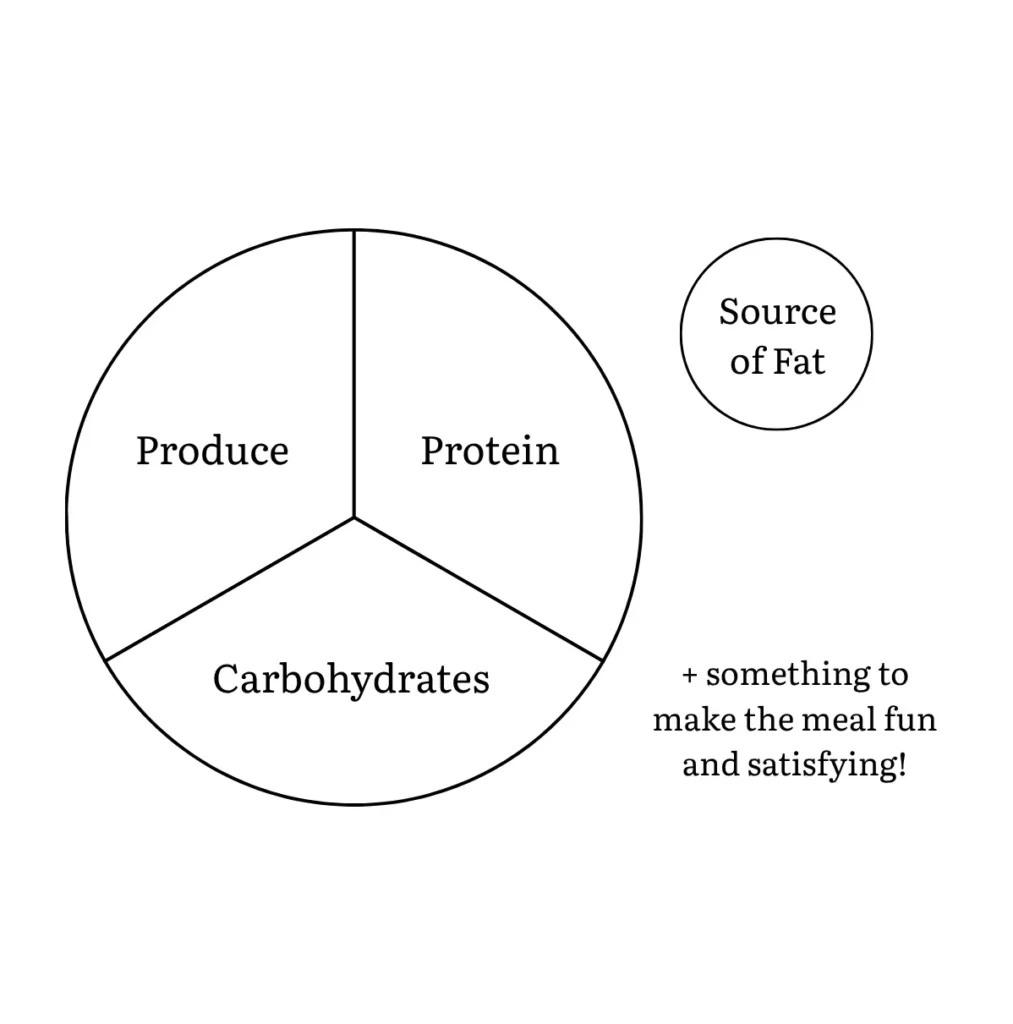
If you’re consistently under-eating carbohydrates, fat, or any other major nutrient, your body will notice. And it will (LOUDLY) ask for more. Food noise is sometimes just a nutrient gap in disguise.
3. Do you actually enjoy your meals?
You can eat nutrient-dense food that also tastes good. Salad dressing on your vegetables. A sauce in your stir-fry. Seasoning on your protein. This isn’t a guilty pleasure, it’s actually helpful. Enjoyment makes you more likely to eat nourishing foods consistently.
And here’s the thing about the foods we demonize: they’re rarely as black-and-white as diet culture makes them sound.
Take salad dressing as an example… the fat in it actually helps your body absorb nutrients from those vegetables. Enjoyment and nutrition can coexist.
When you eat meals that genuinely satisfy you, you’re less likely to spend the rest of the day mentally reaching for something else.
4. Are you letting yourself eat what you crave, intentionally?
Do you wait until the weekend to enjoy food? Or until you find a “healthified” version? Or until the craving gets so overwhelming that you finally give in and then feel terrible about it?
Think of it this way: every time you delay a craving, you’re pulling a slingshot back further and further. The further you pull it, the further it flies when you finally let go. And then we blame ourselves for “going overboard” – when really, the restriction is what caused it.
This can become a vicious cycle: restriction triggers food noise, food noise leads to out-of-control eating, which then triggers guilt and shame — and the cycle repeats.
When you let yourself eat what you actually want, you pull the slingshot back a lot less and feel way more in control.
And when you do eat those foods, pay attention to what’s going through your head. Guilt? Negative self-talk? Thoughts like “I shouldn’t have done that” or “I might as well keep going and start over tomorrow”?
That mindset is a symptom of the restrict-guilt-restrict cycle. Guilt isn’t motivating. It keeps us stuck.
5. Are you dealing with your emotions with more than one tool?
Food is comforting. That is not a flaw. You are not weaker or less disciplined than someone who doesn’t reach for food when they’re stressed or sad. Food has been tied to comfort, community, and care for as long as humans have existed. Sometimes you just need a pint of ice cream after a hard day, and that is okay.
The question isn’t whether you eat emotionally. It’s whether food is the only tool in your toolkit. When it is, it can become the default for every kind of discomfort. Building out other coping strategies (movement, connection, rest, creative outlets) helps you build a healthier relationship with food.
Does this mean GLP-1’s are bad?
Not at all! GLP-1s can be a great medication for some people and you should never feel ashamed for considering it. When making that decision, I suggest talking about it with your dietitian, therapist, and/or general practitioner – especially with a history of disordered eating/eating disorders.
What I want you to take away: Your food noise is not a personal flaw. It can be evidence that you’ve been dieting too long, not eating enough, and not letting yourself enjoy food.
Those things can be worked on. And when they are, a lot of people find the noise gets a lot quieter, without needing a medication.
If you are ready to jump into things with a dietitian, I would love to work with you!
If you want to try some things on your own first, I have a free toolkit that goes into these topics in more depth! 30+ pages of actionable tools that I use in my client sessions. You can download it here!