

How to Heal Your Relationship with Food: 5 Steps to Get Started
Let me guess: you’ve been on and off the diet train for awhile now. The thought of healing your relationship with food feels pretty… impossible.
You can’t imagine how food could possibly feel easy. And what about your health? Don’t you need some kind of rules to follow in order to be healthy and not go off the rails?
If you had constant access to dessert, it would be a free for all. When you can’t have it, it’s all you can think about.
Ugh!!! So what’s the answer?
Believe me when I say you are NOT alone in feeling this way. If healing your relationship with food was easy, Food Freedom with Liv would not exist.
However, the path to get there does not need to be as complicated as it seems.
Let’s go over the first 5 things I typically have my clients start with when healing their relationship with food:
Eat Every 3-5 Hours
The sense of urgency around food is 1000x worse if you are under-fueling. That’s why we start with eating consistently during the day.
We have a lot of evidence to show that the hunger hormone (Ghrelin) and the hormone that tells your body it’s full (leptin) changes with how much you eat. In patients with anorexia, ghrelin levels are significantly increased. Calorie restriction is associated with lower levels of leptin.
This means the way you interact with food while restricting changes biologically. Your body is actively trying to get you to eat more. The more you resist, the stronger these signals get.
No more skipping meals or ignoring hunger. We need to start fueling your body consistently so your brain isn’t always like “OMG GIVE ME FOOD RIGHT NOW.”
Eat Balanced Meals
The first part of getting enough food is eating consistently during the day. The next part is to make sure we are putting enough of what we need on our plates!
This visual is a great starting point:
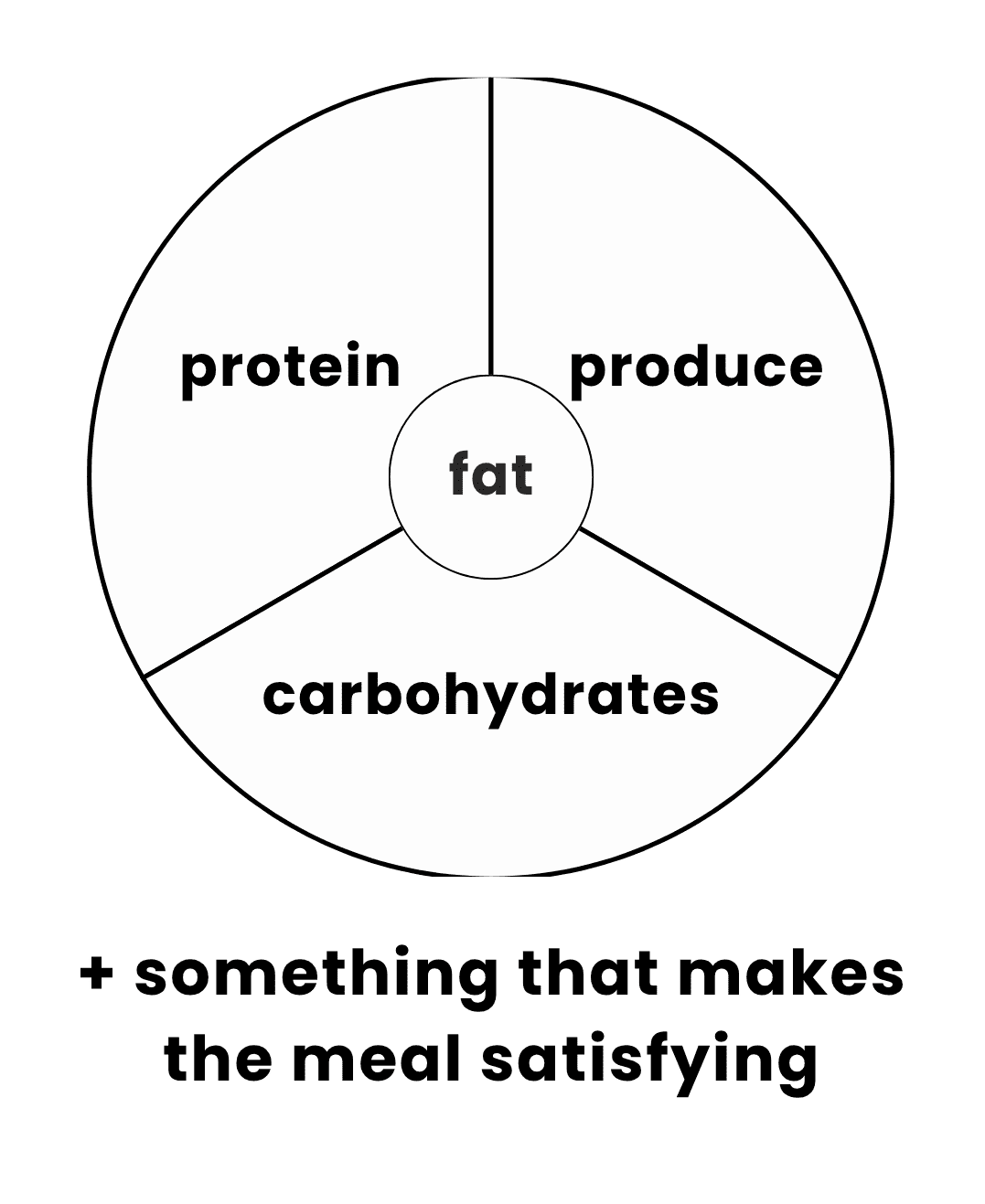
For meals, fill your plate with…
- 1/3 carbs
- 1/3 protein
- 1/3 produce
- a source of fat.
This ensures you are not skimping on macronutrients that diet culture has deemed “bad” (aka carbs and fat!).
The key part of this plate: satisfaction. If you don’t enjoy your meals, you will always be reaching for something else. This can be a sauce, seasoning, or one of the other components you really love.
Slowly Re-incorporate off-limit foods
If you sit down in front of a pack of oreos after a stressful day of not eating, what do you think will happen?
You know. I know. We’ve all been there.
This is not “food freedom.” It’s chaos.
This is why we start with fueling your body properly. Then we talk about how to incorporate these “off limits” foods in a way that feels manageable.
It could be making a tiered list of foods from less scary to most scary and starting at the bottom. It could be intentionally adding dessert to a meal to rebuild trust with your body that these foods are not off limits.
This part of the journey will look different for everyone, but it does not have to be a free for all!
Start Challenging the Diet Thoughts
Thoughts dictate our feelings, which dictate our actions. Challenging the diet mentality feels so hard because it goes against all the beliefs you have in your head.
This discomfort is normal and won’t last forever.
The first step is to start questioning them when they come up. Is this actually true? Where did this belief come from? Does this align with my goals?
As you question the thoughts, you also need to be DOING the opposite.
“Carbs are bad.” Add them to your meals.
“I shouldn’t have dessert on a Tuesday.” Eat dessert on a Tuesday.
We need to challenge the diet mentality with our own thoughts and through our actions.
Work with a Dietitian + a Therapist
Even with the most detailed guidelines, healing your relationship is hard. There are setbacks, doubts, and uncertainty.
This is why working with an anti-diet dietitian and therapist can be so powerful. Our job is to empower you to unlearn these beliefs and replace them with behaviors that feel supportive.
We can answer questions, be a source of accountability, or a reminder of all the progress you’ve made on the days you want to quit.
Let’s acknowledge your progress
You just read this blog. You obviously want to heal your relationship with food, or are at least curious at alternatives to dieting.
That is HUGE and I am proud of you for being here!
If you are ready to jump into things with a dietitian, I would love to work with you!
If you want to try some things on your own first, I have a free toolkit that goes into these topics in more depth! 30+ pages of actionable tools that I use in my client sessions. You can download it here!